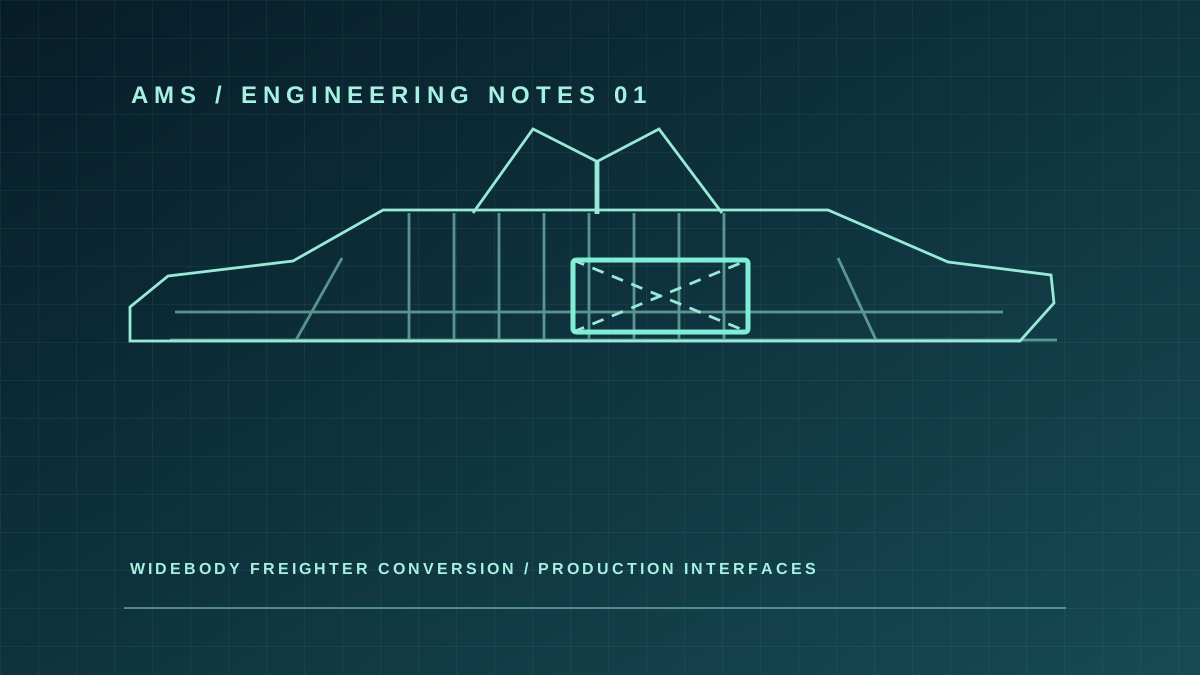
The conversion of a Boeing 777 passenger aircraft into a dedicated freighter is one of the most substantial modification programmes undertaken in commercial aviation.
What begins as an existing passenger aircraft must emerge as a cargo aircraft with significantly different operational requirements, structural arrangements and internal systems.
The engineering is complex. The production challenge is equally significant.
Successful delivery requires extensive planning, controlled modification activity, specialist personnel, materials management, engineering coordination and a disciplined approach to quality and regulatory compliance.
For aircraft owners, operators and conversion programme stakeholders, the central question is not simply whether the conversion can be engineered. It is whether the programme can be delivered safely, efficiently and predictably.
What does a passenger-to-freighter conversion involve?
A passenger-to-freighter (P2F) conversion changes an aircraft's intended operational function, requiring substantial alterations to its approved configuration.
Depending on the aircraft and approved conversion design, work typically encompasses the installation of a large main-deck cargo door, floor reinforcement, cargo-handling equipment, structural modifications and changes to aircraft systems.
Passenger cabin equipment is removed or reconfigured, while new cargo-specific systems and safety provisions are incorporated.
Each of these activities introduces dependencies between engineering, production, planning, inspection, materials and certification.
A modification programme of this scale cannot be managed effectively as a collection of unrelated maintenance tasks. It requires an integrated production strategy.
From aircraft induction to delivery
The programme begins well before the aircraft enters the conversion facility.
Production readiness depends on establishing the work scope, developing realistic schedules, identifying long-lead materials, preparing tooling and confirming personnel requirements.
Once the aircraft is inducted, teams must coordinate access, disassembly, structural modification, systems installation, inspection, testing and final documentation.
Aircraft condition can also affect the programme. Differences in operating history, existing configuration and findings during inspection can create additional work or require engineering clarification.
Effective production management therefore requires a schedule that is structured without becoming inflexible.
The objective is to maintain controlled progress while responding appropriately to the technical realities of each aircraft.
The importance of production planning
Aircraft conversion programmes involve multiple work packages, many of which cannot proceed independently.
Access requirements, structural modifications, systems work and inspection stages must be sequenced carefully.
Poor sequencing can create congestion, repeated access requirements, additional labour hours and unnecessary aircraft downtime.
Effective planning addresses several fundamental questions:
- Is the approved technical information available for the task?
- Are the necessary materials, tooling and suitably competent personnel ready?
- What work must be completed before the next production activity can begin?
- Where are the critical dependencies and potential bottlenecks?
- How will progress and emerging issues be communicated to programme stakeholders?
The quality of the production plan directly influences the ability to control delivery.
However, a plan is only valuable if it remains aligned with actual aircraft progress.
Engineering coordination and technical queries
A conversion programme inevitably involves interaction between production and engineering teams.
Technical Query Notes (TQNs), Non-Conformance Reports (NCRs) and other controlled technical processes play an important role in managing questions and departures from expected conditions.
The production manager's responsibility is to ensure these issues are identified promptly, communicated through the appropriate channels and reflected accurately in the delivery programme.
Engineering decisions must remain with appropriately authorised personnel and organisations.
A strong operational process allows production to continue where appropriate without bypassing technical controls or compromising safety.
Materials, tooling and specialist resources
Large aircraft modification programmes rely on far more than the availability of skilled engineers.
Specialist tooling, aircraft access equipment, installation materials, approved components and inspection resources must all be available at the correct stages of production.
A delayed component or unavailable piece of tooling can disrupt multiple downstream activities.
The same applies to workforce capability.
Structural technicians, aircraft mechanics, electricians, inspectors and other specialists must be coordinated against the actual work scope and production sequence.
The challenge is to establish the right capability at the right time rather than simply increasing headcount.
Experience from the Boeing 777-200LRMF programme
Mark Bateman's aviation career includes production management and on-site representation for Mammoth Freighters' Boeing 777-200LRMF passenger-to-freighter conversion programme in Manchester.
His documented responsibilities include coordinating aircraft activities from induction through delivery, overseeing planning activities, supporting task-card development, implementing process improvements and maintaining communication between Mammoth Freighters and production teams.
He also contributed to the Manchester programme team responsible for delivering the first Mammoth Freighters Boeing 777-200LRMF aircraft.
This experience demonstrates the breadth of operational coordination required when a complex aircraft conversion moves from programme planning into physical production.
It also highlights the importance of having production leadership capable of connecting engineering requirements, workforce activity, customer expectations and delivery milestones.
Why production management matters
For conversion organisations, aircraft operators and leasing companies, the consequences of programme disruption extend beyond the hangar.
Unexpected downtime can affect asset availability, operational planning, commercial commitments and the wider introduction of aircraft into service.
Good production management cannot eliminate every technical uncertainty.
It can, however, improve the visibility of those uncertainties, establish clear responsibilities, support earlier intervention and make delivery decisions more informed.
The value lies in maintaining control of the programme while ensuring that technical compliance and quality remain fundamental requirements.
The wider lesson for aircraft modification programmes
Passenger-to-freighter conversion is an example of a wider principle in aerospace.
Complex modifications succeed when engineering, planning, production, quality and customer coordination operate as one integrated programme.
The aircraft may be the focus of the work, but programme delivery depends on the people, processes and technical controls surrounding it.
For organisations undertaking major aircraft modifications, experienced production leadership is a critical part of that equation.
About the author
Mark Bateman is an aerospace production manager with 39 years of experience across commercial and military aircraft maintenance, modifications and conversion programmes. His background includes the Boeing 777-200LRMF, RAF E-7 Wedgetail, Airbus A380 structural modification and international aircraft connectivity programmes.
Technical information is general industry commentary, not approved engineering instructions or certification guidance. Regulatory and technical decisions remain the responsibility of appropriately authorised organisations and personnel.